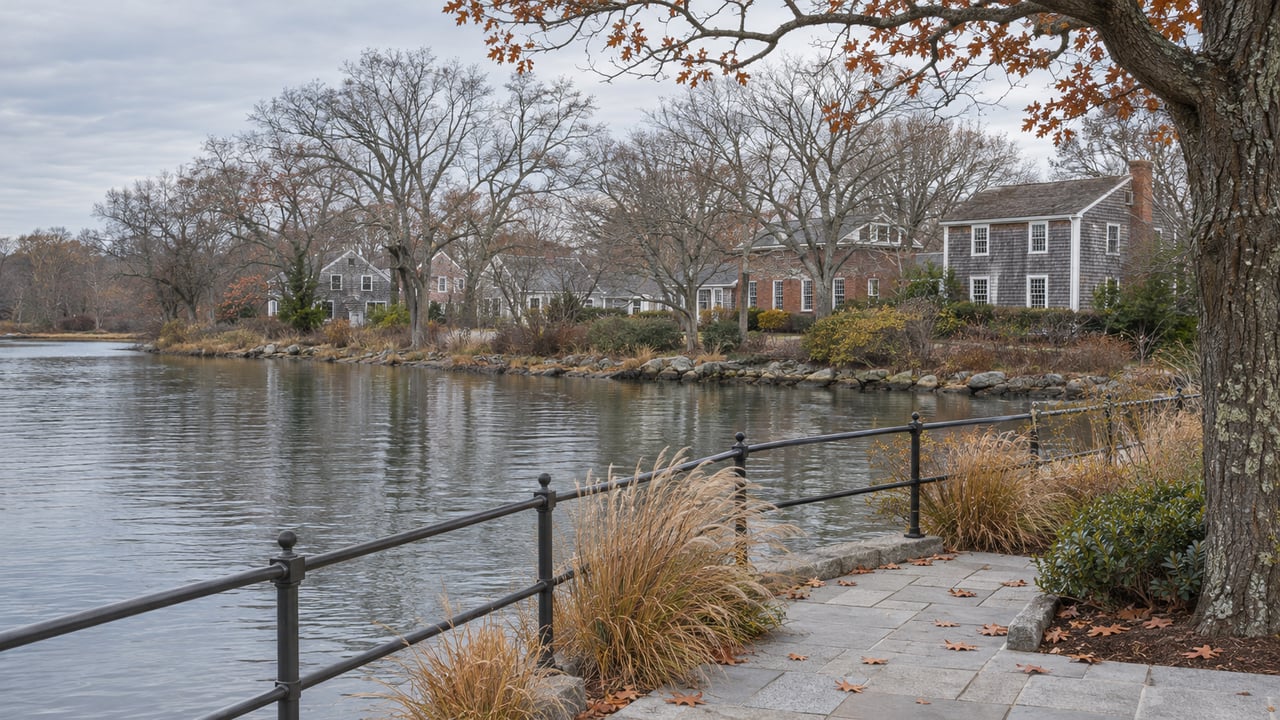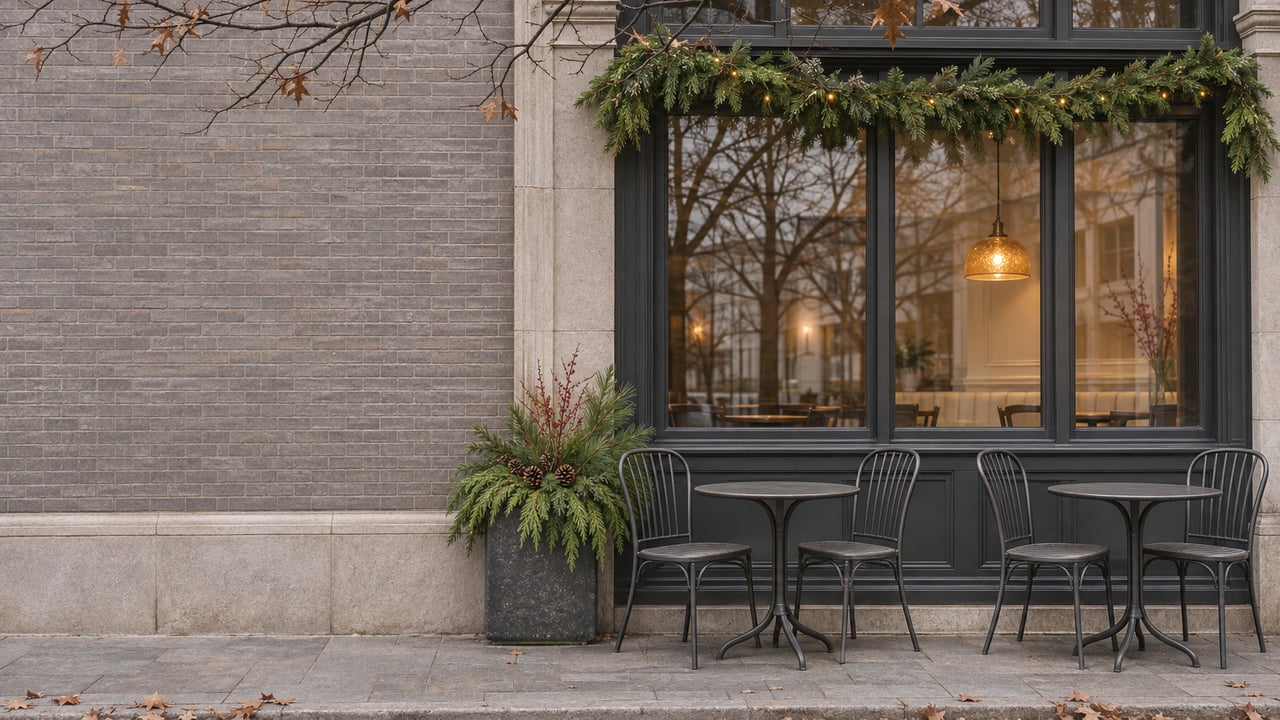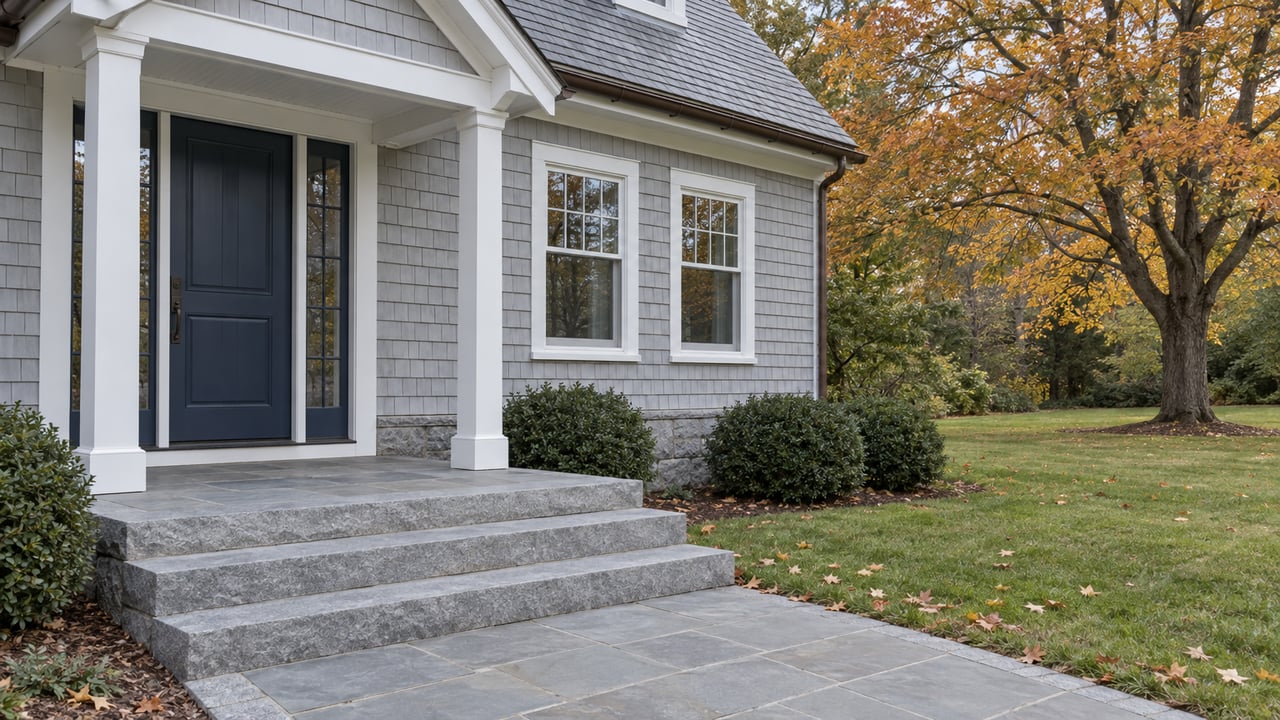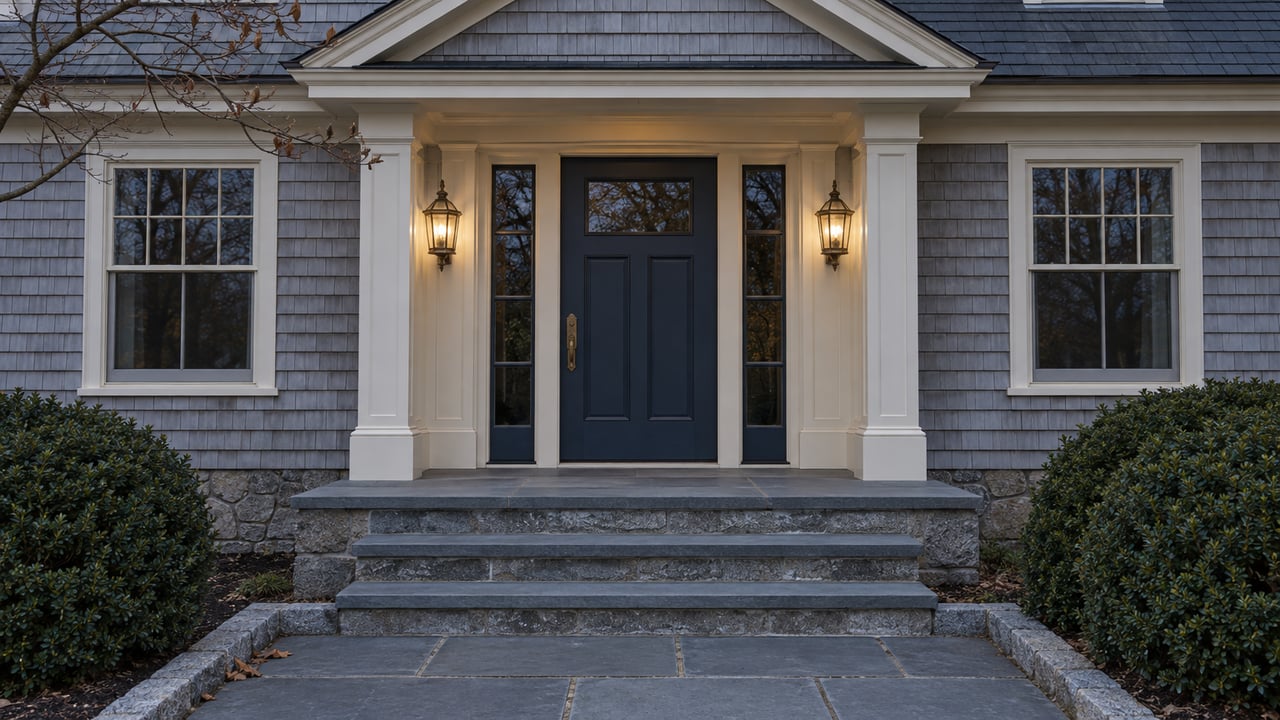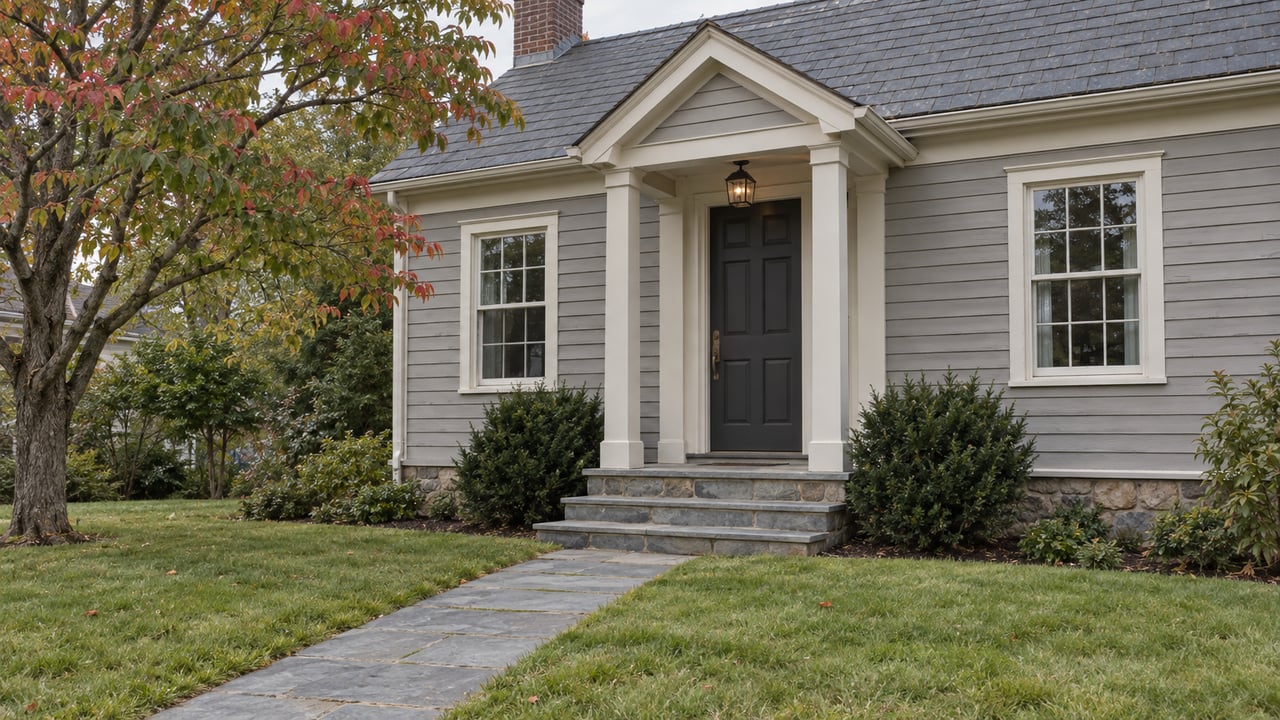
There is a house near the corner of Elm and Main that a buyer might pay several hundred thousand dollars extra for, in part because it sits close enough to walk to the train. In New Canaan, walking to the platform and actually parking there for a daily commute have been two very different problems, and for most of the last two decades, the second one took years to solve.
That gap has narrowed, at least for now. And it changes what the "walk to the train" premium is actually buying.
The Commuter Parking System Near the Platform
New Canaan is unusual among Fairfield County towns in having two Metro-North stops inside its own borders: the New Canaan station at 118 Elm Street, in the heart of downtown, and Talmadge Hill, a smaller stop about three miles south at 1 Talmadge Hill Road, closer to the Darien and Stamford lines.
Both sit on the same branch line. Neither one gets you to Grand Central without eating into your morning. Most trips run in the neighborhood of 65 to 70 minutes, with a transfer at Stamford required for much of the day.
What separated them wasn't the ride. It was the parking.
For years, a permit at the downtown lot, known locally as the Lumberyard, was one of the hardest things to get in town. A 2018 Parking Commission memo put the wait at seven years and was explicit about why the town valued the commuter lots: it argued they were "of tremendous value to the town by allowing people to work in Manhattan, yet live here, boosting property values and economic activity." That framing makes parking more than a logistics issue in the memo’s account.
Talmadge Hill never worked that way. It has carried little to no wait for years, and it's the only one of the town's lots open to non-resident permit holders, a detail that matters because Talmadge Hill also gets used by commuters based in neighboring Darien and Stamford. For the 2025-2026 permit year, an annual pass runs about $663 for the Railroad/Lumberyard lot versus about $504 for Richmond Hill or Talmadge Hill, a modest fee difference that masked a much larger gap in actual availability.
The Waitlist That Shrunk
That gap has been narrowing fast.
The Lumberyard list once ran as high as 1,200 names, according to town officials, and stood at 606 as recently as a few years ago. Then it started dropping. During the pandemic, the Richmond Hill lot's waitlist thinned to just 18 names as commuters worked from home. By March 2025, the Lumberyard list itself had fallen to 25 people, with Parking Commission staff counting somewhere between 40 and 60 visibly empty spaces on a given day. Commission chair Keith Richey called the shrinking number "very interesting" at the time, noting the list had run as long as 1,200 names in recent memory.
Town staff described it as the first time in at least two decades the lot looked like it might clear entirely.
By that spring, the town reported 691 active permits issued for the Lumberyard lot, just 10 names remaining on the Richmond Hill list, and 321 permits at Talmadge Hill, including non-residents. The scarcity that had defined downtown commuter parking for a generation had, in the space of a few years, mostly disappeared.
What the Town Confirms Today
The town's own parking permit page still states it plainly: there is no waitlist for the Talmadge Hill lot, and it remains open to non-resident permit holders. That has been true for years and continues to be the baseline condition today.
The Lumberyard situation is less settled. The 2025 numbers point to a lot that went from a multi-year wait to a short one, but a waitlist system by nature moves in one direction only as fast as the town processes it, and commission members were already asking in early 2025 whether the shift reflected a lasting change in commuting habits or a seasonal dip tied to school schedules and weather. Anyone weighing a purchase near either station should call the Parking Department directly at 203-594-3040 rather than assume the spring 2025 numbers still hold, because this is a fact pattern that moves faster than home prices do.
The Premium You Were Actually Paying For
Here is where it gets useful for anyone comparing New Canaan neighborhoods.
Local market data through August 2026 shows New Canaan's walk-to-downtown corridor, the streets radiating from Elm and Main out through South Avenue and Farm Road, commanding a real and measurable premium over the rest of town. A roughly 2.6 percent gain on a median sale price near $2.6 million works out to about $67,000 in added value for that location alone. Townwide, the median sale price stood at $2,795,000 as of September 2026, with inventory sitting at about one month of supply and homes selling around 102 percent of list price.
That premium has always been described as a walkability premium, the value of being close to shops, restaurants, and the platform itself. But for most of the years that premium was building, a meaningful part of what made that location valuable for a working commuter, the ability to actually park at the station without joining a multi-year line, wasn't included in the price of the house. It was rationed separately, by the town, on a waitlist that had nothing to do with what you paid for the property.
That's no longer true in the same way. If commuter parking access at the downtown station is currently available to more buyers than it has been in twenty years, then some of what that corridor premium has historically compensated for, the practical difference between owning a walk-to-train address and actually being able to use the train to commute, has narrowed. What's left in that premium is closer to pure location and neighborhood character than to guaranteed commute logistics.
Talmadge Hill Is Its Own Market, Not a Fallback
None of this makes Talmadge Hill the discount version of downtown. It isn't.
The area around the Talmadge Hill station, sometimes referred to locally as Ponus/Talmadge Hill, carries a median home value around $2,048,395, placing it among the more expensive residential pockets in the state. It reads as a rural, low-density neighborhood by population, built mostly between 1940 and 1999, dominated by larger single-family homes on bigger lots rather than the tighter, walkable parcels near downtown. It draws its own commuter base, including buyers from across the Darien and Stamford lines who use the station because of its proximity to those towns, not because it's a compromise on New Canaan itself.
The choice between the two areas was never really about price tier. It was about what kind of daily life you wanted: village-center walkability with the commute friction that used to come with it, or more land and privacy with a parking lot that has quietly been the easier one to use for years.
Why This Could Reverse
The town isn't treating the current slack as permanent. Officials have already hired a New York City engineering firm, DESMAN, to study options for a parking structure at the Lumberyard lot, and the Board of Selectmen has discussed extending lots at Talmadge Hill onto adjacent state-owned land near the Merritt Parkway to add roughly 50 more spaces. Both moves suggest town leadership expects demand to climb back, whether from a broader return-to-office push or simple population growth.
If that happens, the wait at the Lumberyard could start climbing again, and the parking-access advantage Talmadge Hill has held for years could compress. None of the numbers in this piece should be treated as fixed. They're a snapshot of a system in the middle of a genuine shift, not a settled state of affairs.
A Few Direct Questions
Does owning a home near the New Canaan station come with a parking permit? No. Permits are issued and waitlisted separately by the town's Parking Department based on residency and vehicle registration, not tied to any specific address or purchase.
Is Talmadge Hill only for buyers priced out of downtown? No. It's a distinct, high-value neighborhood in its own right, with a different housing stock and a different daily rhythm, not a lower tier of the same market.
How do I find out the current waitlist status before I make an offer? Call the New Canaan Parking Department at 203-594-3040. The town's parking permit page is updated directly and is the most reliable source for the current status.
If you're weighing a purchase near either of New Canaan's stations and want to talk through what the current commute picture actually means for a specific street or address, Mary Ellen Williams can walk you through it alongside the other details that matter for a specific address.
This article is general information, not legal, tax or financial advice. Consult a qualified professional about your situation.